Pahang Sago Starch Industry for Keropok Lekor
Sago starch is flour derived from the trunk of the sago palm tree. As a gluten-free flour alternative, sago flour is increasingly popular due to its smooth texture and health benefits when consumed appropriately. Sago flour can be used as an ingredient for making keropok lekor.
Keropok Lekor a traditional Malay snack in the form of fish crackers typical of Terengganu, Malaysia, which are made from a mixture of fish (such as selayang or parang) and sago flour.
Keropok lekor which uses sago flour (not sweet potato/tapioca flour) is known to produce a chewier, softer texture and a more prominent fish taste.
Well, for those of you who are looking for the Pahang sago starch industry for keropok lekor, please contact us immediately.
Physical Conditions and Spatial Distribution of Sago Plantations
Sago generally grows in swampy areas and is more dominant there than along riverbanks. This plant thrives in lowland areas at elevations below 400 meters above sea level. When cultivated at higher elevations, its growth begins to slow and yields decline. In areas above 600 meters above sea level, sago trees typically reach only about 6 meters in height and develop relatively small trunk diameters.
From a topographical perspective, the most suitable land for sago growth consists of flat to gently sloping terrain with slopes ranging from 0 to 3 percent. Although sago can survive on steeper slopes, its distribution in such areas is limited. Sago trees begin producing starch when they reach heights of approximately 6 to 18 meters, indicating the onset of their productive phase.
In East Seram Regency, sago plantations are located within the coordinate range of 646,066 mE – 9,662,103 mN to 646,940 mE – 9,662,070 mN. The total area that has been reorganized covers 50 hectares, comprising 25 hectares from Phase I development in 2016 and an additional 25 hectares from Phase II development in 2019.
Land cover within the study area is relatively diverse. The dominant vegetation consists of homogeneous sago forest, while other sections are characterized by swamp grasses and water hyacinth covering an area of 3.64 hectares. Shrubland areas, totaling 1.51 hectares, typically emerge in locations where sago forests have begun to degrade. These areas are occupied by plant species such as sago, samama, kinar, and marsegu trees.
Intact sago forest covers approximately 15.36 hectares of the area. In addition, two types of mixed forest are present. Mixed Forest Type 1 spans 12.92 hectares and is composed of vegetation such as kinar, pandan, tropical almond (ketapang), marsegu, and sago, with the understory dominated by ferns. Mixed Forest Type 2, which is larger at 18.99 hectares, exhibits greater vegetation diversity, including species such as kayu merah, rattan, candlenut (kenari), kayu burung, and belo hitam. However, within this forest type, sago trees tend to occur in a more sporadic and scattered distribution.
Get to know Eco Sago as the Largest Pahang Sago Starch Industry
Eco Sago is one of the cheapest sago flour factory in the world, ready to meet your sago flour needs for business and household purposes.
Located in Selatpanjang, Meranti Islands—an area rich in sago resources—we are committed to producing high-quality sago flour.
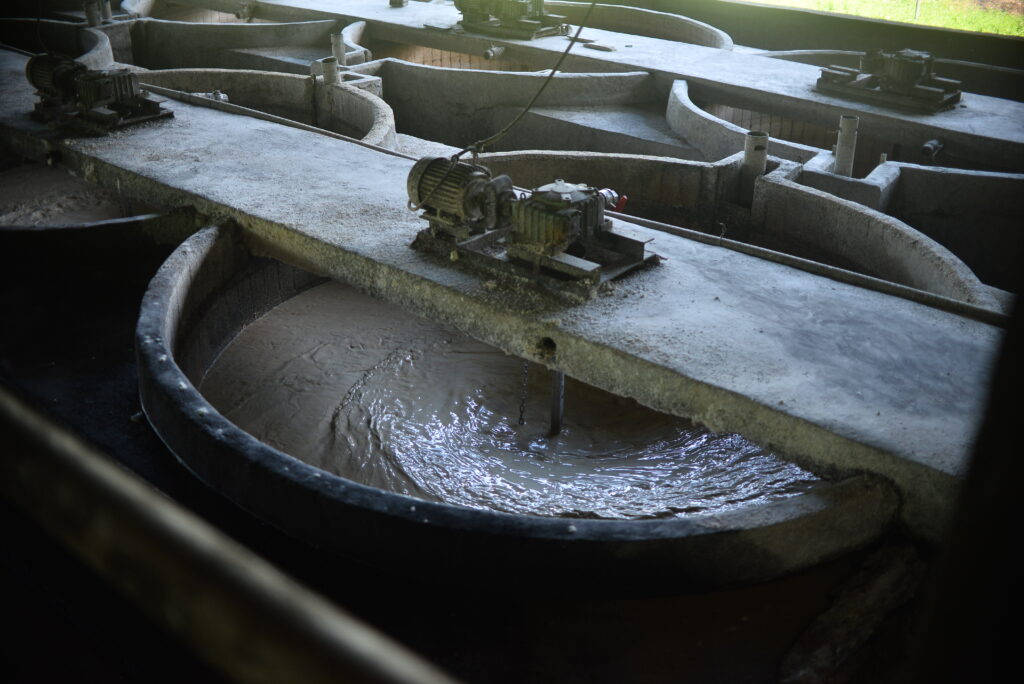
Every stage, from tree harvesting, milling, to screening, is carried out meticulously to produce flour that is smooth, soft, and hygienic.

Eco sago adalah produsen tepung sagu terbesar di dunia dengan kualitas terbaik,
higienis dan teruji sertifikasi, Hadir untuk membuka peluang bisnis untuk anda.
CONTACT US

+62 896 8263 9377
Phone Number

Ecosagos@gmail.com

Makam, Selatpanjang, Riau
Alamat Pabrik 1
Merindang, Selatpanjang, Riau
Alamat Pabrik 2
Alamat Pabrik 2
Ruko Galaxy Baloi Blok A Nomor 4, Batam, Kepri
Kantor
Sertifikasi