Melaka Sago Starch Industry for Keropok Lekor
Sago starch is flour derived from the trunk of the sago palm tree. As a gluten-free flour alternative, sago flour is increasingly popular due to its smooth texture and health benefits when consumed appropriately. Sago flour can be used as an ingredient for making keropok lekor.
Keropok Lekor a traditional Malay snack in the form of fish crackers typical of Terengganu, Malaysia, which are made from a mixture of fish (such as selayang or parang) and sago flour.
Keropok lekor which uses sago flour (not sweet potato/tapioca flour) is known to produce a chewier, softer texture and a more prominent fish taste.
Well, for those of you who are looking for the Melaka sago strach industry for keropok lekor, please contact us immediately.
Prospects and Development Directions for Sago
For centuries, sago starch has served as a primary food source for lowland communities, particularly in Maluku and Papua. Today, its role has expanded significantly as sago flour is utilized across a wide range of industries. These include its use as a raw material for bread, cakes, noodles, and fructose syrup, as well as environmentally friendly products such as biodegradable plastics. Beyond that, sago is also employed in the pharmaceutical, cosmetic, ethanol, paper, and textile industries.
Another notable advantage of sago is that its processing by-products still hold economic value, for example as livestock feed. Nevertheless, most sago production in Indonesia continues to rely on natural forests and semi-cultivation systems. This contrasts with Malaysia, which has made more substantial progress by developing commercial sago plantations, particularly in Sarawak and Johor.
Given these conditions, the development of large-scale sago plantations in Indonesia has become an urgent necessity. The relatively slow natural growth of sago is unable to keep pace with rising demand, while harvesting continues unabated. An additional challenge is the long cultivation period, which can take up to eight years before sago trees are ready for harvest.
With Indonesia’s population projected to reach 300 million by 2025 and an annual growth rate of approximately 2 percent, national food demand is becoming increasingly pressing. If rice production fails to keep up, a deficit of up to 18 million tons is projected. In this context, sago represents a crucial alternative. According to research by Bintoro et al. (2010), a single sago tree can yield up to 800 kilograms of starch, although average yields typically range between 200 and 400 kilograms.
When managed intensively at a density of 100 to 200 trees per hectare, with each tree producing approximately 300 kilograms of starch, potential yields could reach 30 to 60 tons of starch per hectare. This level of production would be sufficient to support the caloric needs of hundreds of millions of people.
In practice, however, sago processing at the farmer level remains largely traditional and is limited to local products such as papeda, sagu lempeng, and sinoli. The potential for developing more diverse value-added products has yet to be fully realized, primarily due to limited knowledge and processing skills among local communities.
Get to know Eco Sago as the Largest Melaka Sago Starch Industry
Eco Sago is one of the cheapest sago flour factory in the world, ready to meet your sago flour needs for business and household purposes.
Located in Selatpanjang, Meranti Islands—an area rich in sago resources—we are committed to producing high-quality sago flour.
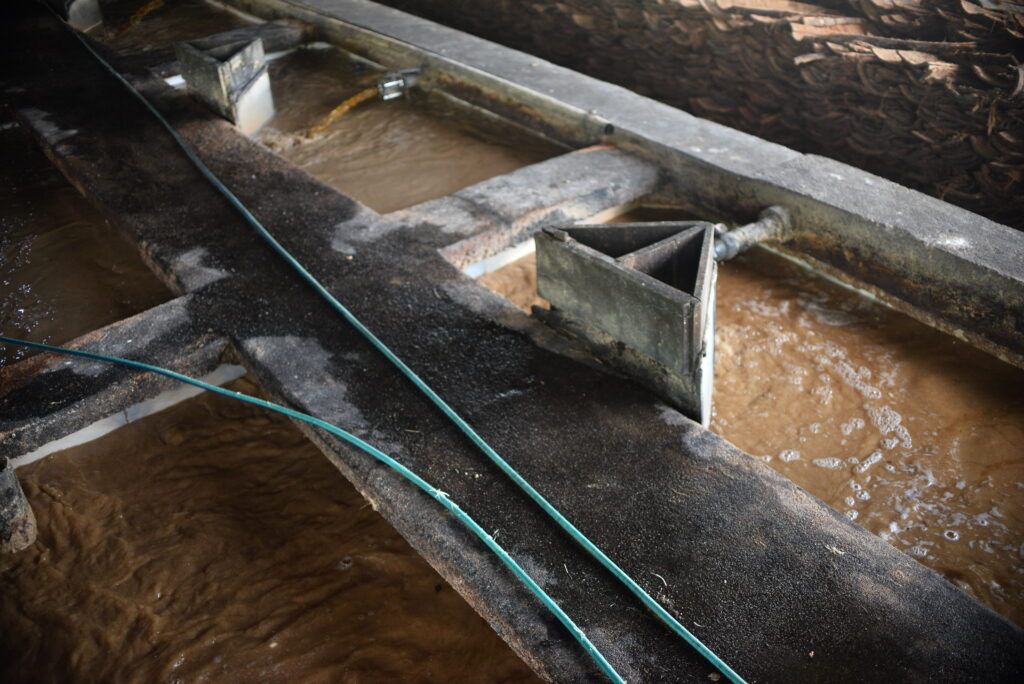
Every stage, from tree harvesting, milling, to screening, is carried out meticulously to produce flour that is smooth, soft, and hygienic.

Eco sago adalah produsen tepung sagu terbesar di dunia dengan kualitas terbaik,
higienis dan teruji sertifikasi, Hadir untuk membuka peluang bisnis untuk anda.
CONTACT US

+62 896 8263 9377
Phone Number

Ecosagos@gmail.com

Makam, Selatpanjang, Riau
Alamat Pabrik 1
Merindang, Selatpanjang, Riau
Alamat Pabrik 2
Alamat Pabrik 2
Ruko Galaxy Baloi Blok A Nomor 4, Batam, Kepri
Kantor
Sertifikasi