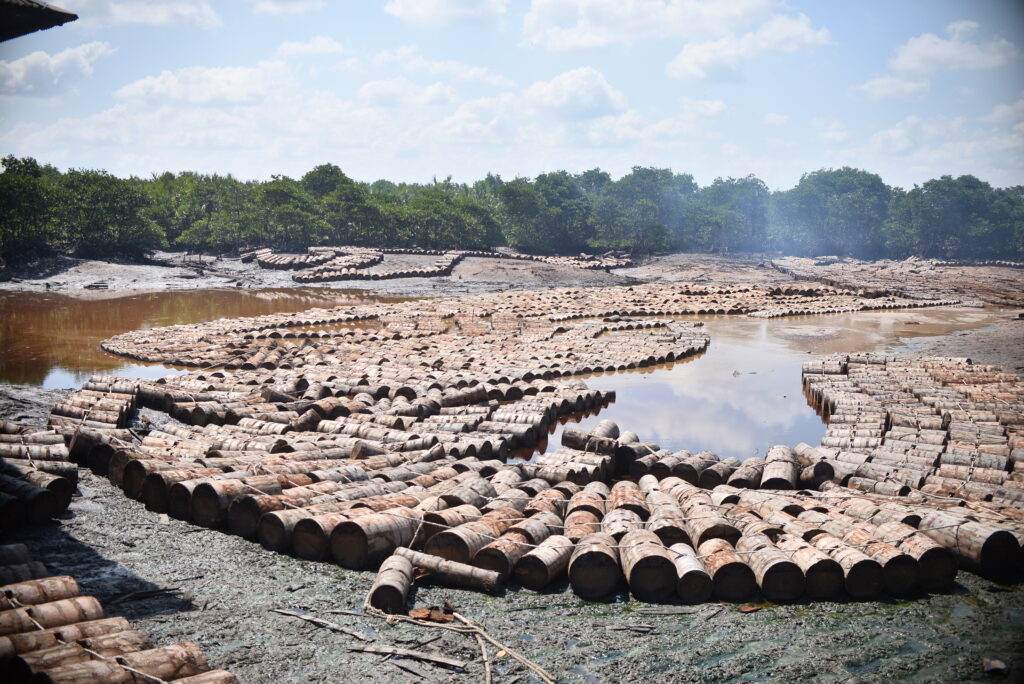
Negeri Sembilan Sago Starch Factory for Keropok Lekor
Sago starch is flour derived from the trunk of the sago palm tree. As a gluten-free flour alternative, sago flour is increasingly popular due to its smooth texture and health benefits when consumed appropriately. Sago flour can be used as an ingredient for making keropok lekor.
Keropok Lekor a traditional Malay snack in the form of fish crackers typical of Terengganu, Malaysia, which are made from a mixture of fish (such as selayang or parang) and sago flour.
Keropok lekor which uses sago flour (not sweet potato/tapioca flour) is known to produce a chewier, softer texture and a more prominent fish taste.
Well, for those of you who are looking for the Negeri Sembilan sago strach Factory for keropok lekor, please contact us immediately.
Sago in Indigenous Life: More Than Just a Food Source
For indigenous communities from Papua and Maluku to Kalimantan, sago is not merely a staple food; it is the heartbeat of their existence. The sago tree has been interwoven with their culture, economy, and spirituality for centuries. Its presence extends far beyond the dining table, deeply embedded in their traditions, identities, and relationship with the natural world.
An Ancestral Food Legacy
In eastern Indonesia, sago is the primary source of energy. Iconic dishes such as Papeda from Papua, Kapurung from South Sulawesi, and Sinonggi from Southeast Sulawesi (and Maluku variants) demonstrate how closely sago is tied to local culinary identity. Beyond being processed into traditional porridges and cakes, sago is also made into sagu bakar (baked sago), which is durable and long-lasting for storage.
With its complex carbohydrate content, sago provides sustainable energy. Its gluten-free nature and low glycemic index make it a safe choice for long-term consumption, perfectly supporting communities that rely on physical labor for their daily lives.
Cultural Meaning and Spiritual Values
In the eyes of indigenous peoples, sago is viewed as a symbol of life and continuity. Planting, caring for, and harvesting sago trees are not just agricultural activities; they are accompanied by prayers and rituals that symbolize gratitude toward nature.
Sago harvest ceremonies are often moments of collective unity, where the community gathers to work together. Traditional tools and techniques for processing sago—from pounding to filtering the starch—are passed down through generations as a testament to preserved local wisdom.
An Economic Pillar Sustaining Communities
In addition to meeting food needs, sago serves as an economic backbone. Sago products are sold in various forms, including raw flour, dried sago, and ready-to-eat processed foods. In several regions, modern processing industries are being developed to add market value.
The global trend prioritizing healthy and gluten-free food opens export opportunities to international markets. This not only strengthens the local economy but also provides a path for indigenous communities to prosper without abandoning their culture.
Ecological Guardians and Environmental Protection
Sago benefits more than just humans; it benefits the entire ecosystem. These trees thrive in peatlands and swamps that are difficult to utilize for other commodities. Their ability to absorb water, prevent erosion, and maintain soil fertility makes sago a vital plant for maintaining natural balance.
Regrettably, the existence of sago forests is now threatened by deforestation, land conversion into palm oil plantations, and mining activities. If left unchecked, this destruction will not only erase the sago trees but also sever the cultural and livelihood chains of indigenous peoples.
Preserving a Shared Future
The sustainability of sago cannot rest solely on the shoulders of indigenous communities. Close collaboration is needed between local communities, the government, and the private sector to preserve sago forests. These efforts do more than protect an ecosystem; they safeguard traditional wisdom, cultural identity, and the rights of the people who have long served as the guardians of nature.
Get to know Eco Sago as the Largest Negeri Sembilan Sago Starch Factory
Eco Sago is one of the cheapest sago flour factory in the world, ready to meet your sago flour needs for business and household purposes.
Located in Selatpanjang, Meranti Islands—an area rich in sago resources—we are committed to producing high-quality sago flour.
Every stage, from tree harvesting, milling, to screening, is carried out meticulously to produce flour that is smooth, soft, and hygienic.

Eco sago adalah produsen tepung sagu terbesar di dunia dengan kualitas terbaik,
higienis dan teruji sertifikasi, Hadir untuk membuka peluang bisnis untuk anda.
CONTACT US

+62 896 8263 9377
Phone Number

Ecosagos@gmail.com

Makam, Selatpanjang, Riau
Alamat Pabrik 1
Merindang, Selatpanjang, Riau
Alamat Pabrik 2
Alamat Pabrik 2
Ruko Galaxy Baloi Blok A Nomor 4, Batam, Kepri
Kantor
Sertifikasi