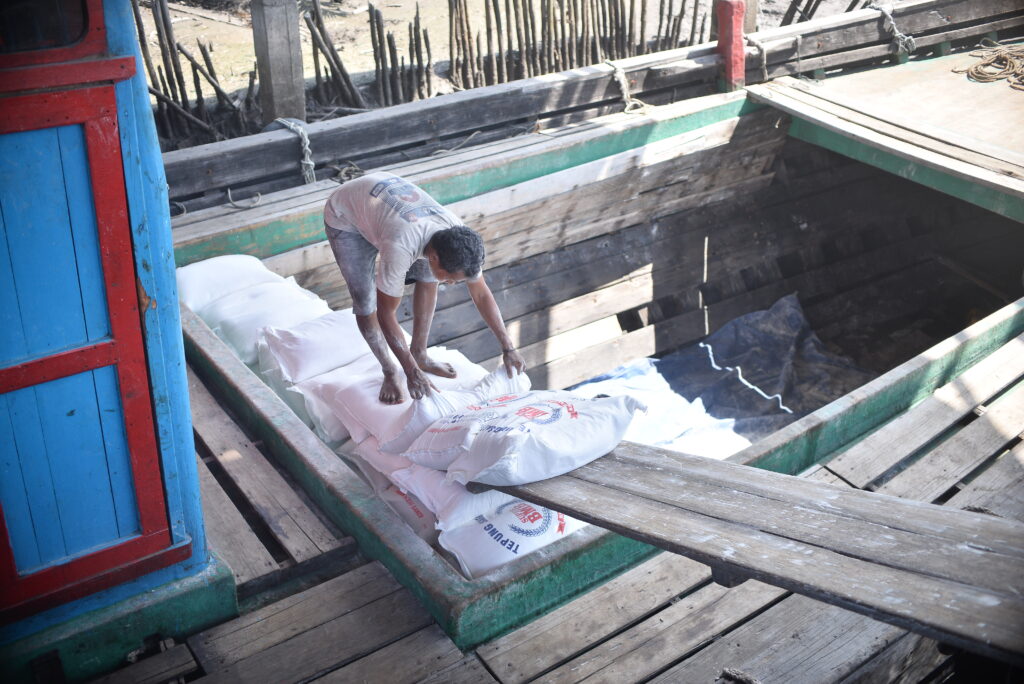
Kuala Lumpur Sago Starch Factory for Keropok Lekor
Sago starch is flour derived from the trunk of the sago palm tree. As a gluten-free flour alternative, sago flour is increasingly popular due to its smooth texture and health benefits when consumed appropriately. Sago flour can be used as an ingredient for making keropok lekor.
Keropok Lekor a traditional Malay snack in the form of fish crackers typical of Terengganu, Malaysia, which are made from a mixture of fish (such as selayang or parang) and sago flour.
Keropok lekor which uses sago flour (not sweet potato/tapioca flour) is known to produce a chewier, softer texture and a more prominent fish taste.
Well, for those of you who are looking for the Kuala Lumpur sago strach Factory for keropok lekor, please contact us immediately.
Traditional Sago Processing: A Preserved Cultural Footprint
For sago-producing communities, processing the sago trunk is more than just labor; it is a tradition inherited from their ancestors. Using simple tools and techniques that have remained virtually unchanged for generations, this process persists—from the felling of the tree to the production of ready-to-use dry sago flour.
- Felling and Splitting the Trunk
The process begins with selecting a mature sago tree. The area around the tree is cleared before it is felled using an axe or a machete. Once the tree has fallen, the trunk is cut to the desired length and split lengthwise using wedges or hardwood chisels to reveal the pith (empulur), which contains the starch.
- Crushing the Pith
The pith is the core of the trunk where the starch reserves are stored. To extract it, the community uses traditional tools such as the nani or pangkur, made from wood and bamboo. This process—locally known as tokok sagu or pangkur sagu—requires significant physical strength and patience, as the pith must be crushed finely so the starch can dissolve perfectly.
- Filtering and Extracting the Starch
The crushed pith is placed on a sahani, a platform made from sago fronds equipped with a traditional filter called a runut (usually made from coconut husks). Water is poured slowly while the pith is squeezed and stirred—a process called ramas sagu. The mixture of water and starch flows down into a container, while the remaining pulp (ampas) is often repurposed for other needs, such as animal feed.
- Sedimenting the Starch
The starch-laden solution is then channeled into a goti or tawear, a sedimentation trough made from split sago trunks. Here, the starch slowly settles at the bottom while the clear water on top is drained away. This natural process can take several hours but is highly effective in separating pure starch from the liquid.
- Drying and Storage
The wet starch sediment is packed into tumang, woven baskets made from sago leaves. To produce dry flour, the starch is dried under the sun until the moisture content is completely gone. Once dry, the sago has a longer shelf life and is ready to be processed into various traditional or modern dishes.
Get to know Eco Sago as the Largest Kuala Lumpur Sago Starch Factory
Eco Sago is one of the cheapest sago flour factory in the world, ready to meet your sago flour needs for business and household purposes.
Located in Selatpanjang, Meranti Islands—an area rich in sago resources—we are committed to producing high-quality sago flour.
Every stage, from tree harvesting, milling, to screening, is carried out meticulously to produce flour that is smooth, soft, and hygienic.

Eco sago adalah produsen tepung sagu terbesar di dunia dengan kualitas terbaik,
higienis dan teruji sertifikasi, Hadir untuk membuka peluang bisnis untuk anda.
CONTACT US

+62 896 8263 9377
Phone Number

Ecosagos@gmail.com

Makam, Selatpanjang, Riau
Alamat Pabrik 1
Merindang, Selatpanjang, Riau
Alamat Pabrik 2
Alamat Pabrik 2
Ruko Galaxy Baloi Blok A Nomor 4, Batam, Kepri
Kantor
Sertifikasi