Indonesia Sago Starch Supplier for Keropok Lekor
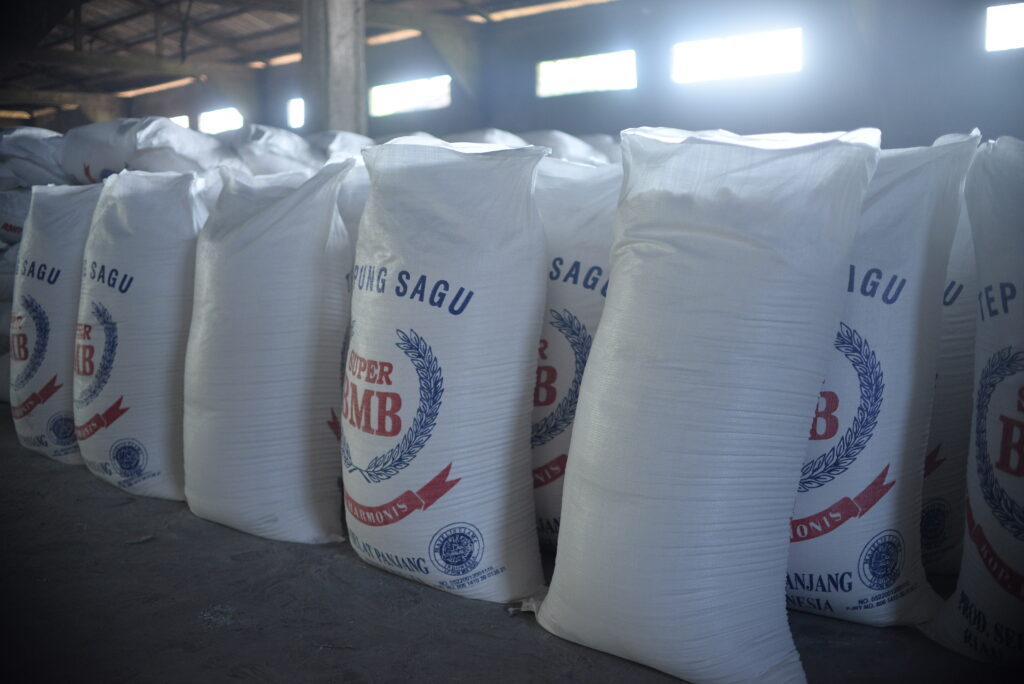
Sago starch is flour derived from the trunk of the sago palm tree. As a gluten-free flour alternative, sago flour is increasingly popular due to its smooth texture and health benefits when consumed appropriately. Sago flour can be used as an ingredient for making keropok lekor.
Keropok Lekor a traditional Malay snack in the form of fish crackers typical of Terengganu, Malaysia, which are made from a mixture of fish (such as selayang or parang) and sago flour.
Keropok lekor which uses sago flour (not sweet potato/tapioca flour) is known to produce a chewier, softer texture and a more prominent fish taste.
Well, for those of you who are looking for the Indonesia sago strach Supplier for keropok lekor, please contact us immediately.
Differences in Texture and Aroma: Wet Sago vs. Dry Sago
Sago is commonly found in two main forms—wet sago and dry sago—each with distinct characteristics, particularly in terms of texture and aroma.
From a texture standpoint, dry sago typically appears as small, coarse granules with a firm and dense structure, somewhat similar to coarse flour. Due to its compact nature, dry sago is more difficult to break down without additional processing. In contrast, wet sago has a much softer and more moist consistency, making it easier to handle and process into smooth dough. This is why wet sago is often preferred for certain types of dishes that require ingredients to blend quickly and evenly.
However, there are important considerations when using sago in products such as cakes or bread. The high amylopectin content in sago starch causes the dough to become sticky and prone to hardening after steaming or baking. To address this, alternative forms such as pearl sago or sago slabs are often recommended, as they produce results that better align with culinary expectations.
In terms of aroma, the difference is also quite noticeable. Wet sago often carries a strong sour smell, which results from natural fermentation during traditional processing. Typically, the water used to wash the starch comes from open sources such as rivers or ponds, allowing certain bacteria to develop and produce this characteristic odor. As a result, wet sago may also feel slightly slimy.
On the other hand, dry sago has little to no strong odor. Any sour scent is minimal and often barely detectable. This makes dry sago more favorable in the modern food industry, as it offers greater stability, cleanliness, and consistency in maintaining product quality and taste.
By understanding these differences in texture and aroma, both producers and consumers can make more informed choices when selecting the type of sago best suited to their needs—whether for everyday household use or for large-scale food production.
Get to know Eco Sago as the Largest Indonesia Sago Starch Supplier
Eco Sago is one of the cheapest sago flour factory in the world, ready to meet your sago flour needs for business and household purposes.
Located in Selatpanjang, Meranti Islands—an area rich in sago resources—we are committed to producing high-quality sago flour.
Every stage, from tree harvesting, milling, to screening, is carried out meticulously to produce flour that is smooth, soft, and hygienic.

Eco sago adalah produsen tepung sagu terbesar di dunia dengan kualitas terbaik,
higienis dan teruji sertifikasi, Hadir untuk membuka peluang bisnis untuk anda.
CONTACT US

+62 896 8263 9377
Phone Number

Ecosagos@gmail.com

Makam, Selatpanjang, Riau
Alamat Pabrik 1
Merindang, Selatpanjang, Riau
Alamat Pabrik 2
Alamat Pabrik 2
Ruko Galaxy Baloi Blok A Nomor 4, Batam, Kepri
Kantor
Sertifikasi