Sago Starch Industries Kelantan, The Best in the World
Sago strach is flour derived from the trunk of the sago palm tree. As a gluten-free flour alternative, sago flour is increasingly popular due to its smooth texture and health benefits when consumed appropriately.
Well, for those of you who are looking for the sago strach industries Kelantan, please contact us immediately.
Prospects and Development of Sago
Sago starch has long served as a staple food for communities living in lowland regions, particularly in Maluku and Papua. Beyond its traditional use, sago flour also plays an increasingly important role across various industrial sectors. It is utilized as a raw material for producing bread, pastries, noodles, high-fructose syrup, and even environmentally friendly biodegradable plastics. In addition, sago starch is widely applied in the manufacture of cosmetics, pharmaceuticals, ethanol, paper, and textiles.
Waste generated from sago processing is also put to use as livestock feed, further increasing the economic value of the crop. However, Indonesia still largely depends on extracting sago from natural forests and semi-cultivated stands, while neighboring Malaysia has taken more advanced steps by establishing commercial sago plantations in Sarawak and Johor.
Given the slow natural growth rate of sago and the increasing demand for starch, large-scale commercial plantation development needs to be seriously considered. One of the main challenges in cultivating sago is its long maturation period—about eight years before it can be harvested.
With Indonesia’s population projected to reach around 300 million by 2025, and with an annual growth rate of approximately 2 percent, the country could face a rice shortage of up to 18 million tons if production fails to keep pace. This situation underscores the urgency of exploring alternative carbohydrate sources, one of which is sago. According to research by Bintoro et al. (2010), a single sago palm can yield as much as 800 kilograms of starch, although average yields typically range from 200 to 400 kilograms per tree.
Under intensive management with a planting density of roughly 100–200 sago palms per hectare and assuming an average yield of 300 kilograms of starch per tree, a one-hectare plantation could produce between 30 and 60 tons of starch. This amount would be sufficient to meet the caloric needs of approximately 200 million Indonesians.
Despite this potential, sago processing in producing regions remains predominantly traditional and small-scale, with production focused mainly on sago lempeng, sinoli, and papeda. The development of other value-added sago products is still limited due to insufficient knowledge and technical skills among farmers.
Get to know Eco Sago as the Largest Sago Strach Industries Kelantan
Eco Sago is one of the cheapest sago flour industries in the world, ready to meet your sago flour needs for business and household purposes.
Located in Kelantan, Meranti Islands—an area rich in sago resources—we are committed to producing high-quality sago flour.
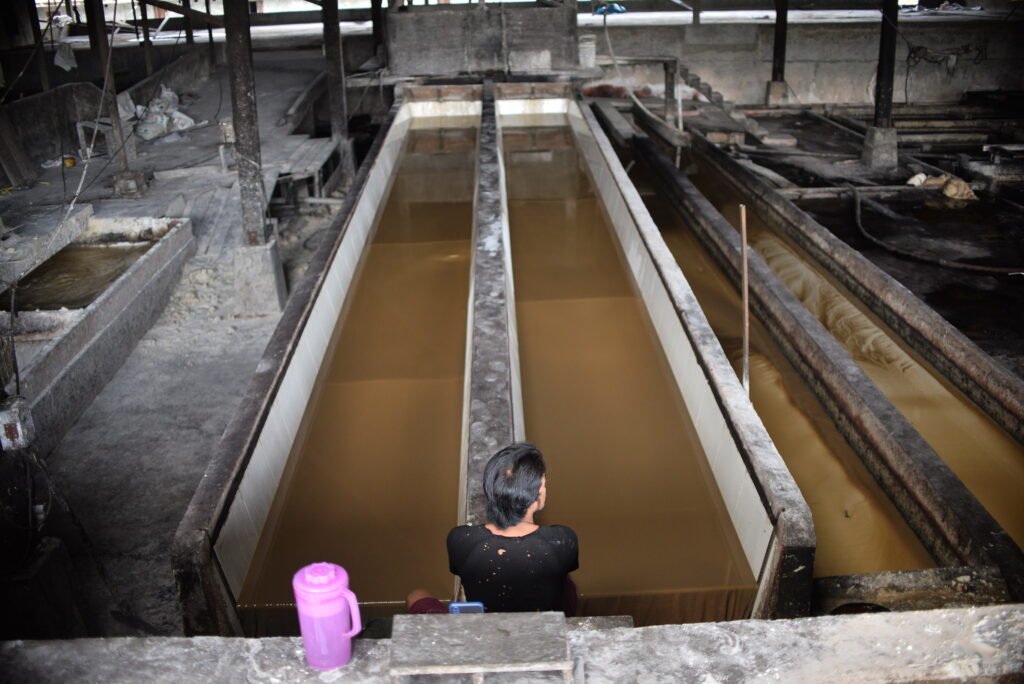
Every stage, from tree harvesting, milling, to screening, is carried out meticulously to produce flour that is smooth, soft, and hygienic.

Eco sago adalah produsen tepung sagu terbesar di dunia dengan kualitas terbaik,
higienis dan teruji sertifikasi, Hadir untuk membuka peluang bisnis untuk anda.
CONTACT US

+62 896 8263 9377
Phone Number

Ecosagos@gmail.com

Makam, Selatpanjang, Riau
Alamat Pabrik 1
Merindang, Selatpanjang, Riau
Alamat Pabrik 2
Alamat Pabrik 2
Ruko Galaxy Baloi Blok A Nomor 4, Batam, Kepri
Kantor
Sertifikasi