Affordable Sago Starch Industries Selatpanjang
Sago strach is flour derived from the trunk of the sago palm tree. As a gluten-free flour alternative, sago flour is increasingly popular due to its smooth texture and health benefits when consumed appropriately.
Well, for those of you who are looking for the sago strach industries Selatpanjang, please contact us immediately.
Understanding Sago Types and Their Growth
In general, sago palms can be grouped into two types based on the presence of thorns: thorny and non-thorny varieties. Several types of thorny sago include Ihur sago (Metroxylon sylvestre Martius), Tuni sago (Metroxylon rumphy Martius), Duri Rotan sago (Metroxylon microcanthum Martius), and Manakaru sago (Metroxylon longispinum Martius). Meanwhile, Molat sago (Metroxylon sagus Rottball) belongs to the non-thorny category.
However, some experts also suggest the possible existence of new, unidentified varieties of Molat sago, such as red Molat, thorny Molat, and red thorny Molat. This can occur due to cross-pollination in sago plants.
The sago palm grows upright and sturdy in clumps. It does not depend on direct sunlight and is classified as a plant that flowers only once in its lifetime. The type and environmental conditions in which it grows influence the stem diameter and the height of the sago palm.
In the seedling phase, the plant remains attached to the mother palm. This process involves the formation of a bud base where roots and stems develop, as well as germination until the first mature leaf appears. The stem growth phase is divided into several stages: sapling, pole, and tree.
At the sapling stage, the roots and stem develop until the stem reaches a leaf-free height of about 1.5 meters. In the pole phase, the leaf-free stem height ranges from 1.5 to 5 meters. After that, in the tree phase, the leaf-free stem height can exceed 5 meters.
Sago plant maturity is divided into three stages: early maturity, productive maturity or Harvest Maturity (MT), and non-productive maturity.
Early maturity begins during the generative phase, when fruits start to form. This process begins with the Wela stage, or thorn shedding, where starch content is still low and some thorns on the leaf sheaths disappear. It continues until the Maputi stage, where nearly all thorns on the leaf sheaths are gone, the sheaths start turning yellow, and small young leaves begin to appear.
Productive maturity (Harvest Maturity or MT) includes the Maputi stage, when the stem begins to swell and the sago heart emerges at the top, a stage known as pregnant sago, up to the Sirih fruit stage, when flower buds begin to bloom and resemble betel fruits with branches shaped like deer antlers. Non-productive maturity occurs if the Harvest Maturity stage is missed, in which the sago palm will fruit and eventually die.
Get to know Eco Sago as the Largest Sago Strach Industries Selatpanjang
Eco Sago is one of the cheapest sago flour industries in the world, ready to meet your sago flour needs for business and household purposes.
Located in Selatpanjang, Meranti Islands—an area rich in sago resources—we are committed to producing high-quality sago flour.
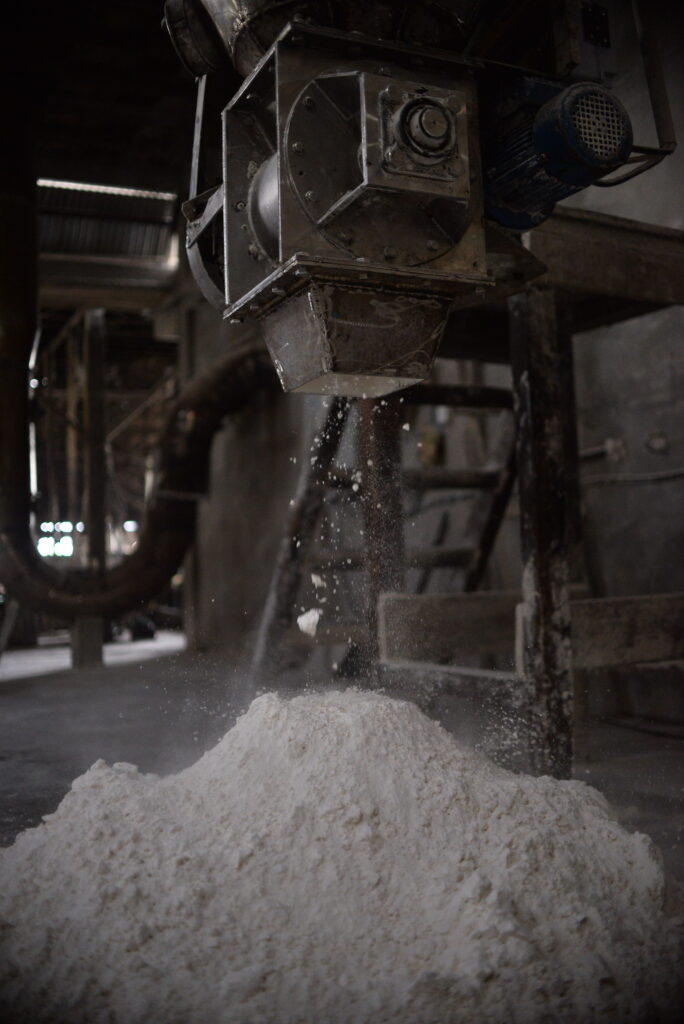
Every stage, from tree harvesting, milling, to screening, is carried out meticulously to produce flour that is smooth, soft, and hygienic.

Eco sago adalah produsen tepung sagu terbesar di dunia dengan kualitas terbaik,
higienis dan teruji sertifikasi, Hadir untuk membuka peluang bisnis untuk anda.
CONTACT US

+62 896 8263 9377
Phone Number

Ecosagos@gmail.com

Makam, Selatpanjang, Riau
Alamat Pabrik 1
Merindang, Selatpanjang, Riau
Alamat Pabrik 2
Alamat Pabrik 2
Ruko Galaxy Baloi Blok A Nomor 4, Batam, Kepri
Kantor
Sertifikasi